
The History of Plaster
Plaster is one of the oldest and most enduring building materials in human history. Long before modern drywall and synthetic finishes, plaster was used to protect, decorate, and define interior and exterior spaces. From ancient tombs to grand palaces and everyday homes, plaster has played a central role in architecture as both a practical and artistic material. This article explores the history of plaster as a wall and ceiling material, tracing its evolution across civilizations and centuries.
PLASTER
Jason Lebeau
2/9/20263 min read
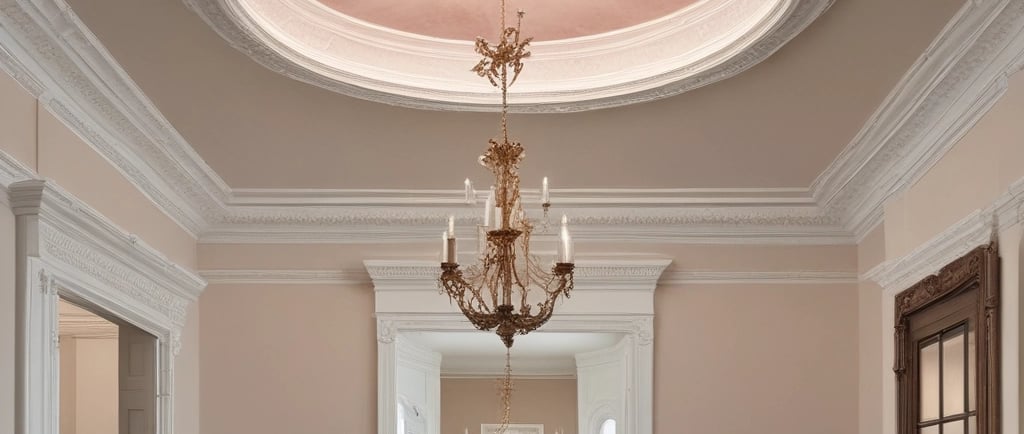
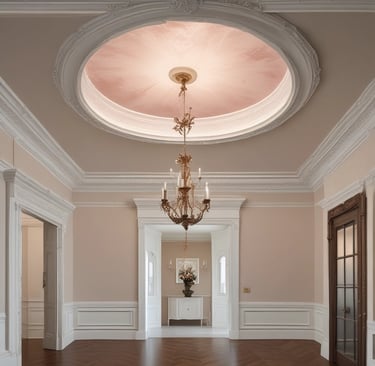
Early Origins of Plaster in Ancient Civilizations
Plaster in Prehistoric and Early Human Settlements
The earliest evidence of plaster dates back over 9,000 years. Archaeological discoveries show that early humans mixed mud, clay, and lime to coat walls and floors. These early plasters helped seal structures against wind, rain, and insects while creating smoother interior surfaces.
In the ancient Near East, lime plaster floors have been found in early settlements such as Jericho, demonstrating that plaster was already valued for durability and hygiene.
Plaster in Ancient Egypt
Ancient Egypt made some of the earliest sophisticated uses of plaster. Egyptians used gypsum and lime plaster extensively in tombs, temples, and homes.
Key uses included:
Coating stone walls to create smooth surfaces
Providing a base for painted hieroglyphs and murals
Protecting structures from erosion
Plaster was essential for Egyptian wall art. Many of the vivid paintings found in tombs today still survive because plaster provided a stable, long-lasting surface.
Classical Antiquity: Greek and Roman Advancements
Plaster in Ancient Greece
The Greeks refined plaster techniques by experimenting with lime-based mixtures. They used plaster not only for walls and ceilings but also as a sculptural medium. Smooth plaster finishes became common in public buildings and private homes, often painted to imitate expensive stone.
Roman Innovations in Plasterwork
Roman Empire builders elevated plaster to a new level. Romans developed strong lime plasters mixed with sand and volcanic ash, making them more durable and moisture-resistant.
Roman plaster was used for:
Interior walls and vaulted ceilings
Decorative reliefs and molded ornamentation
Frescoes, where pigments were painted directly onto wet plaster
Many Roman villas featured richly decorated plaster ceilings, proving the material’s adaptability for both structure and decoration.
The Middle Ages: Functional and Decorative Uses
Plaster in Medieval Europe
During the Middle Ages, plaster became a practical necessity. Stone castles and timber-framed houses relied on plaster to seal walls, improve insulation, and reduce fire risk.
Common medieval uses included:
Lime plaster over wattle-and-daub walls
Whitewashed interiors for cleanliness and light
Simple decorative textures rather than elaborate ornament
Ceilings were often plastered between wooden beams, creating flat surfaces that improved comfort and appearance.
The Renaissance: Plaster as an Art Form
Decorative Stucco and Ceiling Ornamentation
The Renaissance marked a turning point when plaster became a true artistic medium. Craftsmen developed stucco—fine plaster used for decorative reliefs.
During this period:
Ceilings were richly decorated with molded plaster designs
Walls featured panels, cornices, and classical motifs
Plaster imitated carved stone and marble at lower cost
Palaces and churches across Europe showcased plaster as both structure and sculpture.
Plaster in the 18th and 19th Centuries
Georgian and Victorian Interiors
In the 18th century, plaster ceilings became a symbol of refinement. Georgian homes often featured:
Smooth lime plaster walls
Ornate ceiling roses and cornices
Symmetrical decorative elements
The Victorian era expanded plaster use even further. Advances in tools and molds allowed mass production of decorative plaster elements, making detailed ceilings accessible to the middle class.
The Introduction of Gypsum Plaster
Industrial Revolution and Modernization
The 19th century saw the rise of gypsum plaster, which set faster than lime plaster and required less labor. This innovation transformed construction.
Advantages of gypsum plaster included:
Faster drying times
Smoother finishes
Suitability for large-scale building projects
Walls and ceilings could now be finished more quickly, supporting the rapid urban growth of the industrial age.
20th Century: Competition and Adaptation
Plaster vs. Drywall
In the mid-20th century, drywall (plasterboard) became popular due to speed and cost efficiency. However, traditional plaster remained preferred for:
High-end architecture
Curved walls and ceilings
Superior sound insulation and durability
Plaster continued to be valued for its solid feel and long lifespan.
Plaster in Contemporary Architecture
Modern Revival and Sustainable Building
Today, plaster is experiencing a revival. Architects and homeowners appreciate its natural composition, breathability, and timeless appearance.
Modern uses include:
Smooth minimalist walls
Polished plaster finishes like Venetian plaster
Restoration of historic buildings
Lime plaster, in particular, is favored for eco-friendly construction because it allows walls to “breathe” and reduces moisture problems.
Frequently Asked Questions (FAQs)
1. Why was plaster used before paint and wallpaper?
Plaster created smooth, protective surfaces that could be decorated directly with pigments or left plain for brightness and cleanliness.
2. What is the difference between lime plaster and gypsum plaster?
Lime plaster sets slowly and is flexible, while gypsum plaster sets quickly and is harder but less breathable.
3. Why did plaster ceilings become popular?
Plaster ceilings allowed smooth finishes, improved fire resistance, and supported decorative designs like moldings and roses.
4. Is plaster still used today?
Yes. Plaster is widely used in restoration, high-end interiors, and sustainable construction.
5. Why do historic buildings still have plaster walls?
Properly maintained plaster is extremely durable and can last for centuries.
6. Is plaster better than drywall?
Plaster is stronger and more sound-resistant, while drywall is faster and cheaper to install.
Conclusion: A Material That Stands the Test of Time
The history of plaster as a wall and ceiling material is a story of innovation, artistry, and practicality. From ancient civilizations to modern architecture, plaster has adapted to changing needs while maintaining its essential qualities. Its durability, beauty, and versatility ensure that plaster remains a vital part of building traditions—linking today’s homes with thousands of years of architectural history.
Contact
Serving Western Massachusetts for 24 years
Call
© 2026 MrWalls Drywall & Painting. All rights reserved.